Vitamin D is emerging as probably the lowest cost, modifiable risk factor for severe covid-19 disease. Governments are increasingly recommending it but most are limiting levels to those based on protecting bone and muscles, not those required for immune protection.
The UK government recommendation for adults is just 10 micrograms or 400 IU, and that is around one-tenth the amount required to ensure proper function of the immune system. Vitamin D acts as one of the key pro-hormones that helps ensure signalling between the innate and adaptive side of the immune system and is critical to immune function, a health relationship recognised by the notoriously conservative assessor, the European Food Safety Authority.
Today, we launch our ‘Test & Take: Vitamin D‘ campaign that makes a case for vitamin D supplementation, as well as the importance of testing owing to common differences between individuals in levels of circulating vitamin D even at the same levels of intake. As we move into winter in the north and the risk of being exposed to pathogens, including SARS-CoV-2 increases, optimising your vitamin D status becomes even more important.
>>> VISIT ANH-INTL ‘TEST AND TAKE’ VITAMIN D CAMPAIGN
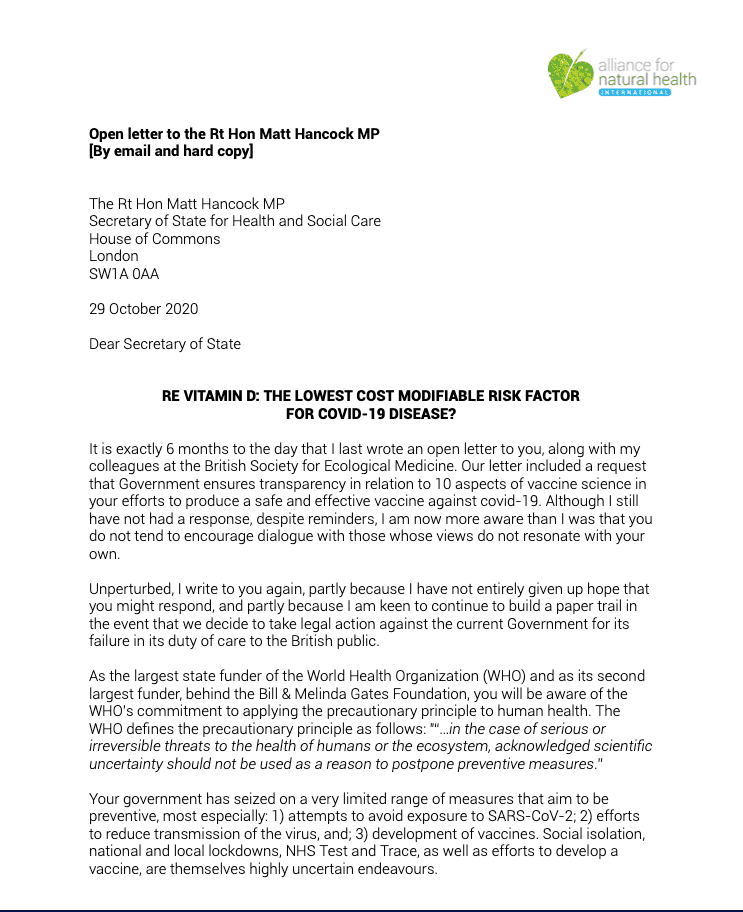
Apart from launching our brand new campaign (see link above) replete with lots of information that will help you learn how to measure and optimise your vitamin D levels, and a video interview with Dr Damien Downing, the UK’s most established medical proponent of vitamin D, you’ll find below our second open letter of the year to Matt Hancock, the UK Secretary of State for Health and Social Care.
This time, we’re appealing to Mr Hancock to upgrade vitamin D advice from bone and muscle health to immune health, as well as to implement studies on vitamin D on covid-19 in the most deprived communities where the need is greatest.
You can download the full letter here.

>>> Visit covidzone.org
>>> Navigate to our new ‘Test & Take: Vitamin D’ campaign
>>> Return to ANH homepage






11 Responses
Here is an interview with 4 world-wide experts who agree that higher blood levels of Vitamin D will help you to:
Thanks Rufus, I’ve now added the video to our resources list so it’s easier to find. It’s a very useful resource so thanks for the reminder!
The ‘elephant in the room’ continues to be ignored by UK Gov and its associates. Their official guidance remains as follows: “The UK government recommendation for adults is 10 micrograms or 400 IU”.
Thanks Ian, we agree! And also that regular testing is highly recommended and if that’s not possible, using the D-Minder app to get an indication of circulating levels. We’ve also linked to the Living Proof rapid test.
Thanks Meleni for the link connection! I am about to offer the test kit with free delivery (UK/Northern Ireland only) as I want as many folks as possible to check their levels. Primal Food Store has received dozens of orders for our home test kit in the last few days. As we know, GP’s are restricted to NHS guidelines and are unable to provide Vitamin D blood tests unless they suspect deficiencies relating to Rickets or other bone issues.
Thank you, that’s great news. I’ll add that note next to the link. Here’s the link to the full campaign page in case you’ve not seen it yet: https://www.anhinternational.org/campaigns/test-take-vitamin-d. We’ll keep adding to it, so if there are additional resources you’d like to suggest, please do send them through.
Please send a copy of your letter to Vaughan Gething the Welsh Health Minister as well.
Great idea, thank you Delyth. We will do!
If Vitamin D at high level 4000 IU were to be recommended it would work, and stop the population being sheep so the government would loose their new found control
My wife and I are taking 30,000 I.u./day of vit. D3. You also need to take 600 mcg of vit.k2 and 500 mg of Magnesium plus 4,000 mg of vit.C.
Thanks for sharing David. We agree, self-care should make up a lot of our health story! If you’re not testing your serum levels of vitamin D every 3-6 months, you might like to look at some of the easy home test kits we write about on the Test & Take: Vitamin D campaign page – or look at the DMinder apps.