Last week, the UK Charity Commission announced a consultation “to inform the review of [its] approach to registering organisations that promote complementary and alternative therapies.”
This consultation is the result of an ongoing attack by a small but vocal group of media savvy, connected UK skeptics who come together under the umbrella of an organisation called the Good Thinking Society.
The non-profit is itself a charity registered as “Good Thinking” (note omission of “Society” in registered name). The organisation is chaired by physicist and long-time enemy of complementary and alternative medicine (CAM), Simon Singh PhD. Its stated mission is purportedly “to encourage curious minds and promote rational enquiry”. In our view, the Good Thinking Society espouses principles that may be better described as ‘new fundamentalism’ and tends to be subscribed to by those of closed and uncurious mind who oppose rational, scientific enquiry.
In September 2016, lawyers instructed by the Good Thinking Society, called on the UK government’s Charity Commission to revoke the charitable status of charities that advocate homeopathy.
This call came after the Good Thinking Society had brought together a group of 11 doctors who, last June, told the Charity Commission it had “failed in its duty to protect the public” by not removing charities that advocated homeopathy.
The skeptic’s call is based on the requirement, under charities law (section 4), that there is a “public benefit”. By incorrectly claiming an absence of scientific evidence (ANH feature ‘Beware Scientists Onward March‘) and fuelled by their anti-CAM dogma, UK skeptics have been at the forefront of attacks against the practice and teaching of homeopathy.
Charity Commission threatened
The Good Thinking Society wasn’t about to give up. The Charity Commission’s announcement of its consultation last week comes after it was threatened with a judicial review.
Rather than being limited just to homeopathy, the consultation now aims to look at CAM therapies more generally. The Charity Commission already has in place limited guidance on registering organisations which advocate CAM and points readers to its decision to not register the Soteria Network, a “network of people in the UK promoting the development of drug-free and minimum medication therapeutic environments for people experiencing ‘psychosis’ or extreme states.”
The scope of the consultation is now extremely broad and affects a very wide range of charities that includes those providing education in the field of CAM, which includes nutritional therapy, and those providing supportive and palliative care, many within the National Health Service (NHS).
The drivers
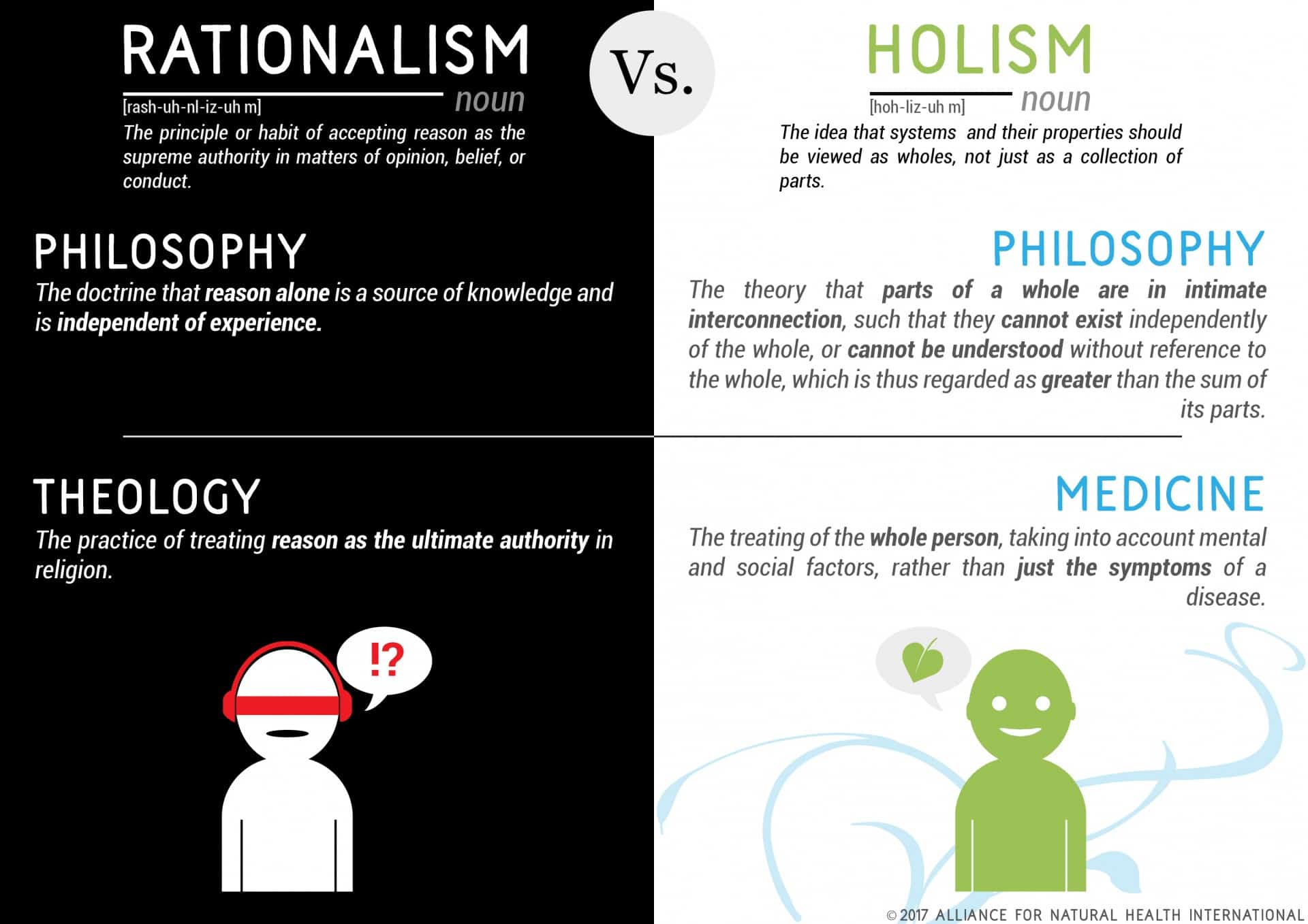
Apart from the Good Thinking Society, there is a deeper and associated network of skeptics who prefer these days to call themselves ‘rationalists’ who are aligned in their drive to attack natural health and prevent use of many scientifically plausible claims about them. These interests come together under another charity, called HealthWatch UK, not to be confused with Healthwatch, the “consumer champion for health and social care”.
HealthWatch UK includes among its patrons, high-flying skeptic Lord Dick Taverne. Blogger Alan Henness, also director of the Nightingale Collaboration, maintains the HealthWatch UK website. In 2012, Healthwatch undertook an investigation of spurious claims, published in the Medico-Legal Journal led by clinical scientist, Les Rose, who declares pharmaceutical and biomedical companies among his clients and co-authored by none other than the ‘master trickster’ and CAM-skeptic, Professor Edzard Ernst.
Views sought by the Commission
In its consultation, the Charity Commission makes clear that its role is not to determine whether CAM therapies are ‘good’ or ‘bad’ or whether or not CAM services should or shouldn’t be made available to the public. Instead the Commission is looking for views on its conduct of the ‘legal test’ for organisations advocating CAM therapies that require demonstration of a purpose that is of “public benefit”. The purposes of most charities in the CAM field will relate to the legal definitions of purpose set out in charity law (section 3) that include: the advancement of health or the saving of lives, the advancement of education, the advancement of science or the relief of those in need because of age, ill-health or disability.
In assessing whether or not an organisation legally meets the requirements for being a charity, the Charity Commission also weighs up the benefit to the public versus the risk of harm. It requires a positive balance. Ironically, this weighing up of risk and benefit is a very tough ask. It’s one of the main requirements for pharmaceutical licensing that costs pharma companies millions to have just a single product licensed, yet even then, given the difference in ‘currencies’ between risk and benefit, it’s a very subjective process sometimes laced with bias and corruption.
With the consultation deadline approaching on midday 20 May 2017, we’re calling on as many UK organisations, associations and practitioners to respond to this consultation. We’re in the process of liaising with different organisations and individuals and collecting views that will be shared.
CALL TO ACTION
- Find the Charity Commission consultation here and review the 8-page document
- For those for whom the consultation is relevant, please contact ANH International by email at [email protected] (subject Charity Commission consultation) should you wish to discuss your consultation response.
- Please forward this email widely to those in your circles who work in the UK in the CAM field so that they might respond.
- Please consider a donation to help support our work to help the CAM and natural health sectors in the UK, and well beyond. Your support is the life-blood of all our work at ANH-Intl.






22 Responses
Does the Charity Commission have to inform its stakeholders it is undertaking this consultation? So far the only notification is coming from the ANH for which we are grateful.
I don’t know Heather, but we will be contacting as many people as possible to make them aware of this consultation over the coming days.
There’s none so blind as those who will not see. We no longer believe that the earth is at the centre of the universe or that the touch of the king can cure tuberculosis. The time is long overdue for people to abandon irrational nonsense like Traditional Chinese Medicine (bear bile cures, tiger bones, etc) and homeopathic so-called malaria preventatives.
There’s nothing new under the sun. This has been a historical issue and those who force their views on others are always the arrogant know-it-alls who align with idol worship. They hate truth and will not care to seriously question their own “truths”, especially if they don’t have to take responsibility for their health or profit from the “rationalist view”. Any self-respecting human will respect others’ views, especially if people are experiencing greater health and well-being using those modalities.
Thought police. Must throw them into the volcano or the gods will be angry. Primitive control based on the declaration that all different thought is bad. Nothing irrational about that. Reasonless reason would prescribe quinolone drugs which paralyze and kill. Restrict the reporting of such terrorist tactics and suppress the reality that there is no known antidote to the drugs being prescribed and the outcome is agony. Then discourage the reporting of the horrific side effects.
Therapies which have not been proven to work or been proven not to work are called “alternative medicine.” Therapies which have been proven to work are called “medicine.” Instead of acting indignant over Simon’s efforts to prevent these unproven or disproven so-called “therapies” (i.e. scams to relieve the sick of their money and derail their seeking actual medical treatment by qualified medical professionals), why not trying on some science for a change and accepting the fact that sCAM is delusional, wishful thinking? Now there’s an idea.
Thank you for your response. As you might expect, we don’t agree with your sentiments. Do you agree that of the 3000 conventional medical treatments evaluated by BMJ Clinical Evidence, that 89% should be withdrawn, given that only 11% have been found to be beneficial [http://clinicalevidence.bmj.com/x/set/static/cms/efficacy-categorisations.html}? We don’t, and consider the low rate of proven beneficial treatments is at least in part down to limitations of the methodologies used (primarily RCTs). Edzard Ernst, who was received warmly into your skeptic ranks, declared in 2010 in his article entitled “In self-defence” published in Pulse Today, that 53% of his findings on so-called CAM therapies had been positive. That conflicts with your own assertion. Bearing in mind that’s the result of using classical RCT methods that are not appropriate for multi-modality approaches common in the practice of CAM. We’re totally happy to rely on the science, but we prefer a scientific approach that befits the original definition of evidence-based medicine that includes clinical experience (JAMA 1992; 268(17): 2420-5) than one that relies exclusively on RCT evidence and which may be susceptible to biases (BMC Med. 2015; 13:200). We wish you well in your own submission – variety is indeed the spice of life – and we look forward to the Charity Commission’s evaluation of all information received as a result of its consultation.
Not so long ago Singh did a hit piece on vitamin supplementation that seemed to come right out of the mouth of big pharma, whose 3.5T$ annual Sickness Industry in US alone needs most to be sick, weakly, overweight, stressed and later medicated for life. He must have a decent subsidy to keep up his diatribe against healthy people.. (not those ‘healthy eating’ ones following the deliberate disinformation Mainstream with their fake, RDAs, food groups, etc).
Do your homework. Singh is a wealthy man – he doesn’t need to be subsidised by big pharma or anyone else to challenge the promotion of quackery and the suggestion that he does smacks of desperation.
Just as there is a right to free speech, freedom of information, protest and democracy , it seems only reasonable that members of the public have the right to choose exactly what they do with and for their bodies. Given there is access to the advantages and disadvantages of various pharmaceuticals and treatments on the Internet they can easily be well informed.
Thank you for taking the time to comment Susan, we appreciate your support and agree with your comments. People should have the ability to choose how they look after their health as well as having access to all the information they need to make informed choices to support that decision.