Last week, the UK Charity Commission announced a consultation “to inform the review of [its] approach to registering organisations that promote complementary and alternative therapies.”
This consultation is the result of an ongoing attack by a small but vocal group of media savvy, connected UK skeptics who come together under the umbrella of an organisation called the Good Thinking Society.
The non-profit is itself a charity registered as “Good Thinking” (note omission of “Society” in registered name). The organisation is chaired by physicist and long-time enemy of complementary and alternative medicine (CAM), Simon Singh PhD. Its stated mission is purportedly “to encourage curious minds and promote rational enquiry”. In our view, the Good Thinking Society espouses principles that may be better described as ‘new fundamentalism’ and tends to be subscribed to by those of closed and uncurious mind who oppose rational, scientific enquiry.
In September 2016, lawyers instructed by the Good Thinking Society, called on the UK government’s Charity Commission to revoke the charitable status of charities that advocate homeopathy.
This call came after the Good Thinking Society had brought together a group of 11 doctors who, last June, told the Charity Commission it had “failed in its duty to protect the public” by not removing charities that advocated homeopathy.
The skeptic’s call is based on the requirement, under charities law (section 4), that there is a “public benefit”. By incorrectly claiming an absence of scientific evidence (ANH feature ‘Beware Scientists Onward March‘) and fuelled by their anti-CAM dogma, UK skeptics have been at the forefront of attacks against the practice and teaching of homeopathy.
Charity Commission threatened
The Good Thinking Society wasn’t about to give up. The Charity Commission’s announcement of its consultation last week comes after it was threatened with a judicial review.
Rather than being limited just to homeopathy, the consultation now aims to look at CAM therapies more generally. The Charity Commission already has in place limited guidance on registering organisations which advocate CAM and points readers to its decision to not register the Soteria Network, a “network of people in the UK promoting the development of drug-free and minimum medication therapeutic environments for people experiencing ‘psychosis’ or extreme states.”
The scope of the consultation is now extremely broad and affects a very wide range of charities that includes those providing education in the field of CAM, which includes nutritional therapy, and those providing supportive and palliative care, many within the National Health Service (NHS).
The drivers
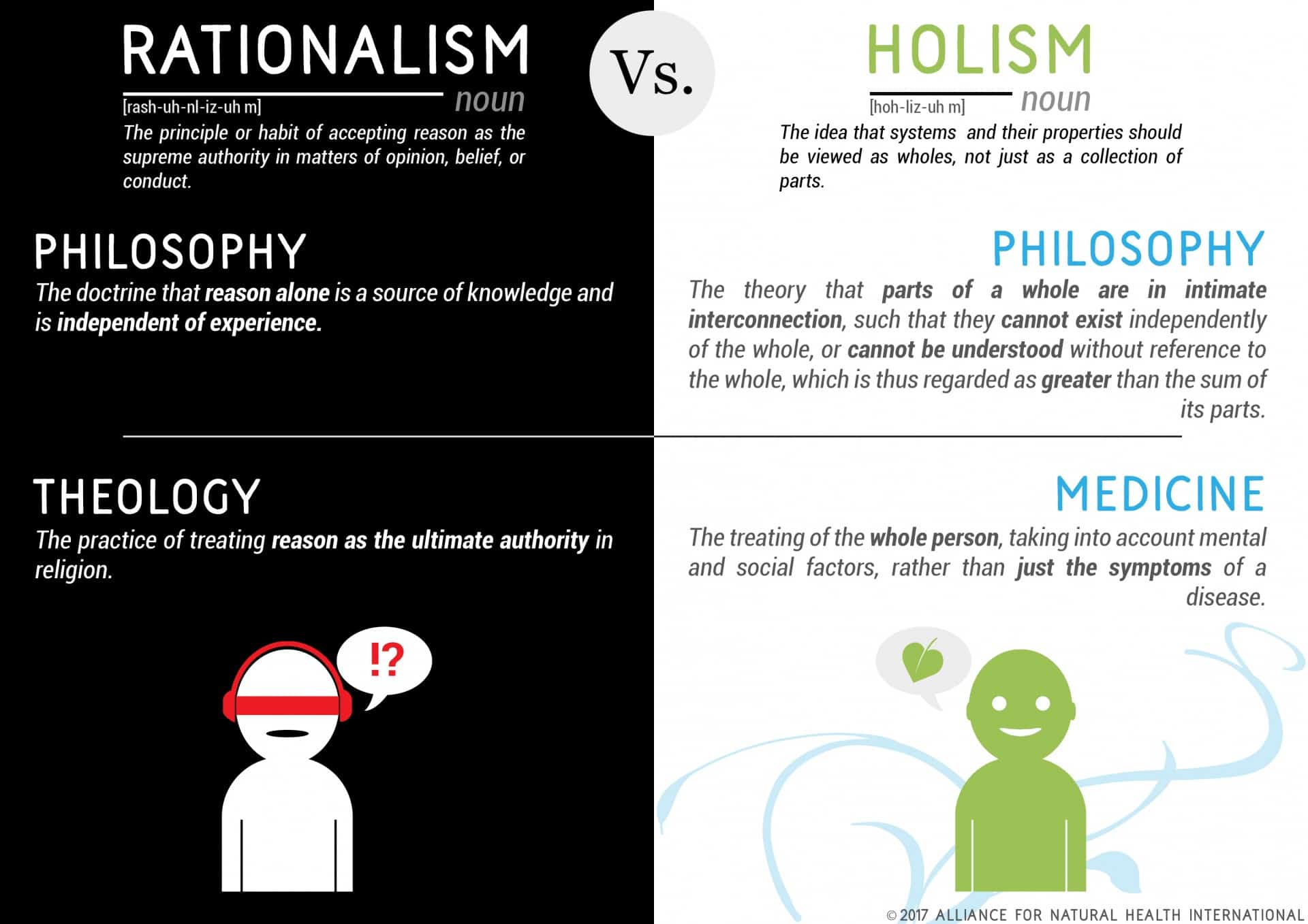
Apart from the Good Thinking Society, there is a deeper and associated network of skeptics who prefer these days to call themselves ‘rationalists’ who are aligned in their drive to attack natural health and prevent use of many scientifically plausible claims about them. These interests come together under another charity, called HealthWatch UK, not to be confused with Healthwatch, the “consumer champion for health and social care”.
HealthWatch UK includes among its patrons, high-flying skeptic Lord Dick Taverne. Blogger Alan Henness, also director of the Nightingale Collaboration, maintains the HealthWatch UK website. In 2012, Healthwatch undertook an investigation of spurious claims, published in the Medico-Legal Journal led by clinical scientist, Les Rose, who declares pharmaceutical and biomedical companies among his clients and co-authored by none other than the ‘master trickster’ and CAM-skeptic, Professor Edzard Ernst.
Views sought by the Commission
In its consultation, the Charity Commission makes clear that its role is not to determine whether CAM therapies are ‘good’ or ‘bad’ or whether or not CAM services should or shouldn’t be made available to the public. Instead the Commission is looking for views on its conduct of the ‘legal test’ for organisations advocating CAM therapies that require demonstration of a purpose that is of “public benefit”. The purposes of most charities in the CAM field will relate to the legal definitions of purpose set out in charity law (section 3) that include: the advancement of health or the saving of lives, the advancement of education, the advancement of science or the relief of those in need because of age, ill-health or disability.
In assessing whether or not an organisation legally meets the requirements for being a charity, the Charity Commission also weighs up the benefit to the public versus the risk of harm. It requires a positive balance. Ironically, this weighing up of risk and benefit is a very tough ask. It’s one of the main requirements for pharmaceutical licensing that costs pharma companies millions to have just a single product licensed, yet even then, given the difference in ‘currencies’ between risk and benefit, it’s a very subjective process sometimes laced with bias and corruption.
With the consultation deadline approaching on midday 20 May 2017, we’re calling on as many UK organisations, associations and practitioners to respond to this consultation. We’re in the process of liaising with different organisations and individuals and collecting views that will be shared.
CALL TO ACTION
- Find the Charity Commission consultation here and review the 8-page document
- For those for whom the consultation is relevant, please contact ANH International by email at [email protected] (subject Charity Commission consultation) should you wish to discuss your consultation response.
- Please forward this email widely to those in your circles who work in the UK in the CAM field so that they might respond.
- Please consider a donation to help support our work to help the CAM and natural health sectors in the UK, and well beyond. Your support is the life-blood of all our work at ANH-Intl.






22 Responses
I don’t think that you can pin all the blame for this on the Good Thinking Society (GTS). There have been a number of cases where trustees and employees of a charity have enriched themselves either by taking money directly from the charity or used the charity to promote their own commercial interests or even just pure hubris. This is down to poor governance more than anything else. It’s a more general problem than just the CAM sector.
We agree with your points, other than it remains our view that the Good Thinking Society has been the key stimulus for the current consultation given the legal threats that preceded it. Money laundering and fraud in charities is a not an uncommon problem for charities in general, but of course this consultation is less about governance and more about verifying public benefit in the case of charities advocating CAM. It’s no bad thing it’s happening and we’re confident as long as the sector responds with due consideration of the brief, all should be fine. Also agree you can run a non-profit without charitable status, for example as a non-profit company limited by guarantee, which is exactly how ANH-Intl operates.
It’s something the Good Thinking Society got involved with after concerns had been raised for several years about certain CAM charities, in particular the Homeopathy Action Trust which amongst other things funds projects that attempt to treat HIV/AIDS with homeopathy in Africa. There have been alarming stories about some of these projects such as advising patients not to take ARVs, the desire to carry out unethical medical trials, the use of radionic machines, etc… The Charity Commission had been asked at various points prior to the threat of legal action if they could review the internal guidelines in the light of this.
Yes but they are stories. No one has made an assessment of the level of harm or integration with conventional medicine so you don’t really know the truth of the situation. Its tabloid style scaremongering, used to promote an ideology, to over-emphasise the harm. Charities in Africa bring humanitarian benefits to the communities such as community centres, bicycles, water aid as well as compassion, care and attention not to mention the placebo effect if you can’t accept the remedies have some action.
What they fail to discuss is the key priority of CAM practitioners to do no harm. We are constantly and consistently looking to treat the cause versus the actual illness. They also fail to address or research the fact that current practitioners and CAM schools are continuously addressing contraindications so we ensure the individual gets the best care possible to help their healing process. This also seems to fail to discuss the overwhelming amount of orthodox medication that is over prescribed and doubled up with other meds which cause them to get worse. The toxic effect those medications can have on their bodies frightening. I find it equally shocking to see they are not as concerned with those on palliative care as it doesn’t seem to matter so much. Why can’t these commissions look for ways to align rather than fight. Our bodies are amazing and fascinating things that sometimes need help from both standpoints.
We need freedom of choice. As conventional medicine couldn’t do anything to help my problems I tried homoeopathy which has been very helpful indeed. Since then I have trained as a homoeopath & helped many others in the same way. Most people who turn to complementary therapies have already tried the conventional route to no avail. Many have been damaged by allopathic treatments.
Is right, there are none so blind that cannot see. However, it is those that oppose complementary medicines on the grounds of lack of scientific evidence, that are sightless. They cling on tightly to their narrow belief systems displaying the same irrationality that they levy against the religious. If they were to turn their own scientific scalpel on the biochemical model, they would find it strewn with inconsistencies, falsehoods, and mistaken beliefs. It is not the great cure that so many believe it is. It is the newest medicine on the planet and still in it’s infancy. It is an experiment in progress. It will take several more generations of experimentation before it is hewn into a proper system of medicine that can ensure safety. Those practising this form of medicine swear on the Hippocratic oath to do no harm, yet hundreds of thousands of people each year suffer disease or die from iatrogenic causes. The biochemical model can save lives and bring immense relief to suffering, but it is not yet a safe form of medicine. How can those who advocate it’s use as the only scientifically proven effective and safe medicine continue to do so in light of annual iatrogenic disease and deaths and medical disasters such as thalidomide? Complementary medicines, used by millions across the globe, have a far superior safety record, yet are continually accused (unscientifically) of being unsafe with, it would seem, those with an axe to grind.
Most CAM practitioners study in the complementary field because they are sceptical about orthodox medicine. Either they themselves or members of their family have been badly let down by allopathic medicine . No one has the right to tell anyone what treatment they must receive .